|
DIGIULIO UTLEY, LLC - New
Orleans DWI / DUI Attorney
Louisiana
Criminal Defense Practice> DWI and
DUI Defense
<<Back
to Criminal Defens
Louisiana
DWI / DUI Defense
Attorneys Dylan C. Utley and Ariel K.
DiGiulio practice aggressive representation
and strategic defense of people who are
facing DWI charges. Driving
while intoxicated can result in the
loss of your driving privileges and a
stain on your criminal record. Do not
let this happen to you. Call us today
for a free consultation to discuss the
circumstances surrounding your arrest
and your options and legal arguments when
faced with a DWI arrest.
In addition to the criminal charges,
you will also need an attorney to fight
to save your driving privileges in an
administrative hearing. If you have been
arrested for a DWI, in order to save your
driving privileges you must request an
administrative hearing within 15 days
of your arrest. We will attend the
administrative hearing on your behalf
and fight to protect your driving privileges.
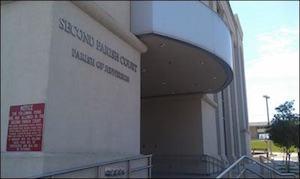
We represent persons who have been arrested
for DUI/DWI
in New Orleans and surrounding areas
including, Jefferson Parish (Gretna, Metairie,
Kenner, Avondale), St. Tammany Parish
(arrests in Covington, Mandeville, Madisonville),
arrests on the Causeway, Baton Rouge,
and St. Charles Parish.
The attorneys at DIGIULIO UTLEY, LLC
have the experience and skill to protect
your rights and your reputation
as they fight for the best possible
outcome in your case.
@readfile("http://www.webrss.com/get_mysite.php?mysiteId=20255");
?>
§ 14:98. Operating a vehicle
while intoxicated
A. (1) The crime of operating a vehicle
while intoxicated is the operating of
any motor vehicle, aircraft, watercraft,
vessel, or other means of conveyance when:
(a) The operator is under the influence
of alcoholic beverages; or
(b) The operator's blood alcohol concentration
is 0.08 percent or more by weight based
on grams of alcohol per one hundred cubic
centimeters of blood; or
(c) The operator is under the influence
of any controlled dangerous substance
listed in Schedule I, II, III, IV, or
V as set forth in R.S. 40:964; or
(d) (i) The operator is under the influence
of a combination of alcohol and one or
more drugs which are not controlled dangerous
substances and which are legally obtainable
with or without a prescription.
(ii) It shall be an affirmative defense
to any charge under this Subparagraph
pursuant to this Section that the label
on the container of the prescription drug
or the manufacturer's package of the drug
does not contain a warning against combining
the medication with alcohol.
(e) (i) The operator is under the influence
of one or more drugs which are not controlled
dangerous substances and which are legally
obtainable with or without a prescription.
(ii) It shall be an affirmative defense
to any charge under this Subparagraph
pursuant to this Section that the operator
did not knowingly consume quantities of
the drug or drugs which substantially
exceed the dosage prescribed by the physician
or the dosage recommended by the manufacturer
of the drug.
(2) A valid driver's license shall not
be an element of the offense, and the
lack thereof shall not be a defense to
a prosecution for operating a vehicle
while intoxicated.
B. (1) On a first conviction, notwithstanding
any other provision of law to the contrary,
the offender shall be fined not less than
three hundred dollars nor more than one
thousand dollars, and shall be imprisoned
for not less than ten days nor more than
six months. Imposition or execution of
sentence shall not be suspended unless:
(a) The offender is placed on probation
with a minimum condition that he serve
two days in jail and participate in a
court-approved substance abuse program
and participate in a court-approved driver
improvement program; or
(b) The offender is placed on probation
with a minimum condition that he perform
four eight-hour days of court-approved
community service activities, at least
half of which shall consist of participation
in a litter abatement or collection program,
participate in a court-approved substance
abuse program, and participate in a court-approved
driver improvement program. An offender,
who participates in a litter abatement
or collection program pursuant to this
Subparagraph, shall have no cause of action
for damages against the entity conducting
the program or supervising his participation
therein, including a municipality, parish,
sheriff, or other entity, nor against
any official, employee, or agent of such
entity, for any injury or loss suffered
by him during or arising out of his participation
in the program, if such injury or loss
is a direct result of the lack of supervision
or act or omission of the supervisor,
unless the injury or loss was caused by
the intentional or grossly negligent act
or omission of the entity or its official,
employee, or agent.
(2) (a) If the offender had a blood
alcohol concentration of 0.15 percent
or more by weight based on grams of alcohol
per one hundred cubic centimeters of blood,
at least forty-eight hours of the sentence
imposed pursuant to Paragraph (B)(1) of
this Subsection shall be served without
the benefit of parole, probation, or suspension
of sentence. Imposition or execution of
the remainder of the sentence shall not
be suspended unless the offender complies
with Subparagraph (B)(1)(a) or (b) of
this Subsection.
(b) If the offender had a blood alcohol
concentration of 0.20 percent or more
by weight based on grams of alcohol per
one hundred cubic centimeters of blood,
the offender shall be fined not less than
seven hundred fifty dollars nor more than
one thousand dollars and at least forty-eight
hours of the sentence imposed pursuant
to Paragraph (B)(1) of this Subsection
shall be served without the benefit of
parole, probation, or suspension of sentence.
Imposition or execution of the remainder
of the sentence shall not be suspended
unless the offender complies with Subparagraph
(B)(1)(a) or (b) of this Subsection.
C. (1) On a conviction of a second offense,
notwithstanding any other provision of
law to the contrary except as provided
in Paragraph (3) of this Subsection, regardless
of whether the second offense occurred
before or after the first conviction,
the offender shall be fined not less than
seven hundred fifty dollars, nor more
than one thousand dollars, and shall be
imprisoned for not less than thirty days
nor more than six months. At least forty-eight
hours of the sentence imposed shall be
served without benefit of parole, probation,
or suspension of sentence. Nothing herein
shall prohibit a court from sentencing
a defendant to home incarceration, if
otherwise allowed under the provisions
of Article 894.2 of the Code of Criminal
Procedure. Imposition or execution of
the remainder of the sentence shall not
be suspended unless:
(a) The offender is placed on probation
with a minimum condition that he serve
fifteen days in jail and participate in
a court-approved substance abuse program
and participate in a court-approved driver
improvement program; or
(b) The offender is placed on probation
with a minimum condition that he perform
thirty eight-hour days of court-approved
community service activities, at least
half of which shall consist of participation
in a litter abatement or collection program,
and participate in a court-approved substance
abuse program, and participate in a court-approved
driver improvement program. An offender,
who participates in a litter abatement
or collection program pursuant to this
Subparagraph, shall have no cause of action
for damages against the entity conducting
the program or supervising his participation
therein, including a municipality, parish,
sheriff, or other entity, nor against
any official, employee, or agent of such
entity, for any injury or loss suffered
by him during or arising out of his participation
therein, if such injury or loss is a direct
result of the lack of supervision or act
or omission of the supervisor, unless
the injury or loss was caused by the intentional
or grossly negligent act or omission of
the entity or its official, employee,
or agent.
(2) (a) If the offender had a blood
alcohol concentration of 0.15 percent
or more by weight based on grams of alcohol
per one hundred cubic centimeters of blood,
at least ninety-six hours of the sentence
imposed pursuant to Paragraph (1) of this
Subsection shall be served without the
benefit of parole, probation, or suspension
of sentence. Imposition or execution of
the remainder of the sentence shall not
be suspended unless the offender complies
with Subparagraph (1)(a) or (b) of this
Subsection.
(b) If the offender had a blood alcohol
concentration of 0.20 percent or more
by weight based on grams of alcohol per
one hundred cubic centimeters of blood,
the offender shall be fined one thousand
dollars and at least ninety-six hours
of the sentence imposed pursuant to Paragraph
(1) of this Subsection shall be served
without the benefit of parole, probation,
or suspension of sentence. Imposition
or execution of the remainder of the sentence
shall not be suspended unless the offender
complies with Subparagraph (1)(a) or (b)
of this Subsection.
(3) Notwithstanding the provisions of
Paragraph (1) of this Subsection, on a
conviction of a second offense when the
first offense was for the crime of vehicular
homicide in violation of R.S. 14:32.1,
or first degree vehicular negligent injuring
in violation of R.S. 14:39.2, the offender
shall be imprisoned with or without hard
labor for not less than one year nor more
than five years, and shall be fined two
thousand dollars. At least six months
of the sentence of imprisonment imposed
shall be without benefit of probation,
parole, or suspension of sentence. Imposition
or execution of the remainder of the sentence
shall not be suspended unless the provisions
of Subparagraph (1)(a) or (b) of this
Subsection are complied with.
D. (1) (a) On a conviction of a third
offense, notwithstanding any other provision
of law to the contrary and regardless
of whether the offense occurred before
or after an earlier conviction, the offender
shall be imprisoned with or without hard
labor for not less than one year nor more
than five years and shall be fined two
thousand dollars. One year of the sentence
of imprisonment shall be imposed without
benefit of probation, parole, or suspension
of sentence. The court, in its discretion,
may suspend all or any part of the remainder
of the sentence of imprisonment. If any
portion of the sentence is suspended,
the offender shall be placed on supervised
probation with the Department of Public
Safety and Corrections, division of probation
and parole, for a period of time equal
to the remainder of the sentence of imprisonment,
which probation shall commence on the
day after the offender's release from
custody.
(b) Any offender placed on probation
pursuant to the provisions of this Subsection
shall be required as a condition of probation
to participate in thirty eight-hour days
of court-approved community service activities
and to submit to and complete either of
the following requirements:
(i) To immediately undergo an evaluation
by the Department of Health and Hospitals,
office of behavioral health to determine
the nature and extent of the offender's
substance abuse disorder and to participate
in any treatment plan recommended by the
office of behavioral health, including
treatment in an inpatient facility approved
by the office for a period of not less
than four weeks followed by outpatient
treatment services for a period not to
exceed twelve months.
(ii) To participate in substance abuse
treatment in an alcohol and drug abuse
program provided by a drug division subject
to the applicable provisions of R.S.13:5301
et seq. if the offender is otherwise eligible
to participate in such program.
(c) In addition to the requirements
set forth in Subparagraph (b) of this
Paragraph, any offender placed on probation
pursuant to the provisions of Subsection
D of this Section shall be placed in a
home incarceration program approved by
the division of probation and parole for
a period of time not less than six months
and not more than the remainder of the
sentence of imprisonment.
(d) If any offender placed on probation
pursuant to the provisions of Subsection
D of this Section fails to complete the
substance abuse treatment required by
the provisions of this Paragraph or violates
any other condition of probation, including
conditions of home incarceration, his
probation may be revoked, and he may be
ordered to serve the balance of the sentence
of imprisonment, without credit for time
served under home incarceration.
(e) If the offender fails to complete
the substance abuse treatment required
by the provisions of this Paragraph or
violates any condition of home incarceration,
he shall be imprisoned for the original
term of his suspended sentence with no
credit for time served under home incarceration.
(2) (a) In addition, the court shall
order, subject to the discretion of the
prosecuting district attorney, that the
vehicle being driven by the offender at
the time of the offense shall be seized
and impounded, and sold at auction in
the same manner and under the same conditions
as executions of writ of seizures and
sale as provided in Book V, Title II,
Chapter 4 of the Code of Civil Procedure.
If the district attorney elects to forfeit
the vehicle, he shall file a written motion
at least five days prior to sentencing
stating his intention to forfeit the vehicle.
When the district attorney elects to forfeit
the vehicle, the court shall order it
forfeited.
(b) The vehicle shall be exempt from
sale if it was stolen, or if the driver
of the vehicle at the time of the violation
was not the owner and the owner did not
know that the driver was operating the
vehicle while intoxicated. If this exemption
is applicable, the vehicle shall not be
released from impoundment until such time
as towing and storage fees have been paid.
(c) In addition, the vehicle shall be
exempt from sale if all towing and storage
fees are paid by a valid lienholder.
(d) The proceeds of the sale shall first
be used to pay court costs and towing
and storage costs, and the remainder shall
be allocated as follows: sixty percent
of the funds shall go to the arresting
agency, twenty percent to the prosecuting
district attorney, and twenty percent
to the Louisiana Property and Casualty
Insurance Commission for its use in studying
other ways to reduce drunk driving and
insurance rates.
(3) (a) An offender sentenced to home
incarceration during probation shall be
subject to special conditions to be determined
by the court, which shall include but
shall not be limited to the following:
(i) Electronic monitoring.
(ii) Curfew restrictions.
(iii) Home visitation at least once
per month by the Department of Public
Safety and Corrections for the first six
months. After the first six months, the
level of supervision will be determined
by the department based upon a risk assessment
instrument.
(b) The court shall also require the
offender to obtain employment and to participate
in a court-approved driver improvement
program at his expense. The activities
of the offender outside of his home shall
be limited to traveling to and from work,
church services, Alcoholics Anonymous
meetings, or a court-approved driver improvement
program.
(c) Offenders sentenced to home incarceration
required under the provisions of this
Section shall be subject to all other
applicable provisions of Code of Criminal
Procedure Article 894.2.
E. (1) (a) Except as otherwise provided
in Subparagraph (4)(b) of this Subsection,
on a conviction of a fourth or subsequent
offense, notwithstanding any other provision
of law to the contrary and regardless
of whether the fourth offense occurred
before or after an earlier conviction,
the offender shall be imprisoned with
or without hard labor for not less than
ten years nor more than thirty years and
shall be fined five thousand dollars.
Two years of the sentence of imprisonment
shall be imposed without benefit of probation,
parole, or suspension of sentence. The
court, in its discretion, may suspend
all or any part of the remainder of the
sentence of imprisonment. If any portion
of the sentence is suspended, the offender
shall be placed on supervised probation
with the Department of Public Safety and
Corrections, division of probation and
parole, for a period of time not to exceed
five years, which probation shall commence
on the day after the offender's release
from custody.
(b) Any offender placed on probation
pursuant to the provisions of this Subsection
shall be required, as a condition of probation,
to participate in forty eight-hour days
of court-approved community service activities
and to submit to and complete either of
the following requirements:
(i) To immediately undergo an evaluation
by the Department of Health and Hospitals,
office of behavioral health to determine
the nature and extent of the offender's
substance abuse disorder and to participate
in any treatment plan recommended by the
office of behavioral health, including
treatment in an inpatient facility approved
by the office for a period of not less
than four weeks followed by outpatient
treatment services for a period not to
exceed twelve months.
(ii) To participate in substance abuse
treatment in an alcohol and drug abuse
program provided by a drug division subject
to the applicable provisions of R.S.13:5301
et seq. if the offender is otherwise eligible
to participate in such program.
(c) In addition to the requirements
set forth in Subparagraph (b) of this
Paragraph, any offender placed on probation
pursuant to the provisions of Subsection
E of this Section shall be placed in a
home incarceration program approved by
the division of probation and parole for
a period of time not less than one year
nor more than the remainder of the term
of supervised probation.
(d) If any offender placed on probation
pursuant to the provisions of Subsection
E of this Section fails to complete the
substance abuse treatment required by
the provisions of this Paragraph or violates
any other condition of probation, including
conditions of home incarceration, his
probation may be revoked, and he may be
ordered to serve the balance of the sentence
of imprisonment, without credit for time
served under home incarceration.
(2) (a) In addition, the court shall
order, subject to the discretion of the
prosecuting district attorney, that the
vehicle being driven by the offender at
the time of the offense be seized and
impounded, and be sold at auction in the
same manner and under the same conditions
as executions of writ of seizure and sale
as provided in Book V, Title II, Chapter
4 of the Code of Civil Procedure. If the
district attorney elects to forfeit the
vehicle, he shall file a written motion
at least five days prior to sentencing
stating his intention to forfeit the vehicle.
(b) The vehicle shall be exempt from
sale if it was stolen, or if the driver
of the vehicle at the time of the violation
was not the owner and the owner did not
know that the driver was operating the
vehicle while intoxicated. If this exemption
is applicable, the vehicle shall not be
released from impoundment until such time
as towing and storage fees have been paid.
(c) In addition, the vehicle shall be
exempt from sale if all towing and storage
fees are paid by a valid lienholder.
(d) The proceeds of the sale shall first
be used to pay court costs and towing
and storage costs, and the remainder shall
be allocated as follows: sixty percent
of the funds shall go to the arresting
agency, twenty percent to the prosecuting
district attorney, and twenty percent
to the Louisiana Property and Casualty
Insurance Commission for its use in studying
other ways to reduce drunk driving and
insurance rates.
(3) (a) An offender sentenced to home
incarceration during probation shall be
subject to special conditions to be determined
by the court, which shall include but
not be limited to the following:
(i) Electronic monitoring.
(ii) Curfew restrictions.
(iii) Home visitation at least once
per month by the Department of Public
Safety and Corrections for the first six
months. After the first six months, the
level of supervision will be determined
by the department based upon a risk assessment
instrument.
(b) The court shall also require the
offender to obtain employment and to participate
in a court-approved driver improvement
program at his expense. The activities
of the offender outside of his home shall
be limited to traveling to and from work,
church services, Alcoholics Anonymous
meetings, or a court-approved driver improvement
program.
(c) Offenders sentenced to home incarceration
required under the provisions of this
Section shall be subject to all other
applicable provisions of Code of Criminal
Procedure Article 894.2.
(4) (a) If the offender has previously
been required to participate in substance
abuse treatment and home incarceration
pursuant to Subsection D of this Section,
the offender shall not be sentenced to
substance abuse treatment and home incarceration
for a fourth or subsequent offense, but
shall be imprisoned at hard labor for
not less than ten nor more than thirty
years, and at least three years of the
sentence shall be imposed without benefit
of suspension of sentence, probation,
or parole.
(b) If the offender has previously received
the benefit of suspension of sentence,
probation, or parole as a fourth offender,
after serving the mandatory sentence required
by Subparagraph (E)(1)(a), no part of
the remainder of the sentence may be imposed
with benefit of suspension of sentence,
probation, or parole, and no portion of
the sentence shall be imposed concurrently
with the remaining balance of any sentence
to be served for a prior conviction for
any offense.
F. (1) For purposes of determining whether
a defendant has a prior conviction for
violation of this Section, a conviction
under either R.S. 14:32.1, vehicular homicide,
R.S. 14:39.1, vehicular negligent injuring,
or R.S. 14:39.2, first degree vehicular
negligent injuring, or a conviction under
the laws of any state or an ordinance
of a municipality, town, or similar political
subdivision of another state, which prohibits
the operation of any motor vehicle, aircraft,
watercraft, vessel, or other means of
conveyance while intoxicated, while impaired,
or while under the influence of alcohol,
drugs, or any controlled dangerous substance
shall constitute a prior conviction. This
determination shall be made by the court
as a matter of law.
(2) For purposes of this Section, a
prior conviction shall not include a conviction
for an offense under this Section, under
R.S. 14:32.1, 39.1, or R.S. 39.2, or under
a comparable statute or ordinance of another
jurisdiction, as described in Paragraph
(1) of this Subsection, if committed more
than ten years prior to the commission
of the crime for which the defendant is
being tried and such conviction shall
not be considered in the assessment of
penalties hereunder. However, periods
of time during which the offender was
awaiting trial, on probation for an offense
described in Paragraph (1) of this Subsection,
under an order of attachment for failure
to appear, or incarcerated in a penal
institution in this or any other state
shall be excluded in computing the ten-year
period.
G. The legislature hereby finds and declares
that conviction of a third or subsequent
DWI offense is presumptive evidence of
the existence of a substance abuse disorder
in the offender posing a serious threat
to the health and safety of the public.
Further, the legislature finds that there
are successful treatment methods available
for treatment of addictive disorders.
Court-approved substance abuse programs
provided for in Subsections B, C, and
D of this Section shall include a screening
procedure to determine the portions of
the program which may be applicable and
appropriate for individual offenders and
shall assess the offender's degree of
alcohol abuse.
H. "Community service activities"
as used in this Section may include duty
in any morgue, coroner's office, or emergency
treatment room of a state-operated hospital
or other state-operated emergency treatment
facility, with the consent of the administrator
of the morgue, coroner's office, hospital,
or facility.
I. An offender ordered to participate
in a substance abuse program in accordance
with the provisions of this Section shall
pay the cost incurred in participating
in the program. Failure to make such payment
shall subject the offender to revocation
of probation, unless the court determines
that the offender is unable to pay. If
the court determines that the offender
is unable to pay, the state shall pay
for the cost of the substance abuse treatment.
An offender sentenced to home incarceration
and to participate in a driver improvement
program shall pay the cost incurred in
participating in home incarceration and
a driver improvement program unless the
court determines that the offender is
unable to pay. However, if the court determines
that an offender is unable to pay the
costs incurred for participating in a
substance abuse treatment program, driver
improvement program, or home incarceration,
the court may, upon completion of such
program or home incarceration, require
that the offender reimburse the state
for all or a portion of such costs pursuant
to a payment schedule determined by the
court.
J. This Subsection shall be cited as
the "Child Endangerment Law".
When the state proves in addition to the
elements of the crime as set forth in
Subsection A of this Section that a minor
child twelve years of age or younger was
a passenger in the motor vehicle, aircraft,
watercraft, vessel, or other means of
motorized conveyance at the time of the
commission of the offense, of the sentence
imposed by the court, the execution of
the minimum mandatory sentence provided
by Subsection B or C of this Section,
as appropriate, shall not be suspended.
If imprisonment is imposed pursuant to
the provisions of Subsection D, the execution
of the minimum mandatory sentence shall
not be suspended. If imprisonment is imposed
pursuant to the provisions of Subsection
E, at least two years of the sentence
shall be imposed without benefit of suspension
of sentence.
K. (1) In addition to any penalties imposed
under this Section, upon conviction of
a first offense if the offender had a
blood alcohol concentration of 0.20 percent
or more by weight based on grams of alcohol
per one hundred cubic centimeters of blood
the driver's license of the offender shall
be suspended for two years. Such offender
may apply for a restricted license to
be in effect during the entire period
of suspension upon proof to the Department
of Public Safety and Corrections that
his motor vehicle has been equipped with
a functioning ignition interlock device
in compliance with the requirements of
R.S. 32:378.2. The ignition interlock
device shall remain installed and operative
on his vehicle during the first twelve-month
period of suspension of his driver's license
following the date of conviction.
(2) (a) In addition to any penalties
imposed under this Section, upon conviction
of a second offense, any vehicle, while
being operated by the offender, shall
be equipped with a functioning ignition
interlock device in accordance with the
provisions of R.S. 15:306. This requirement
shall remain in effect for a period of
not less than six months. In addition,
the device shall remain installed and
operative during any period that the offender's
operator's license is suspended under
law and for any additional period as determined
by the court.
(b) In addition to any penalties imposed
under this Section and notwithstanding
the provisions of Subparagraph (2)(a)
of this Subsection, upon conviction of
a second offense if the offender had a
blood alcohol concentration of 0.20 percent
or more by weight based on grams of alcohol
per one hundred cubic centimeters of blood,
the driver's license of the offender shall
be suspended for four years. The offender
may apply for a restricted license to
be in effect during the period of suspension
upon proof to the Department of Public
Safety and Corrections that his motor
vehicle has been equipped with a functioning
ignition interlock device in compliance
with the requirements of R.S. 32:378.2.
The ignition interlock device shall remain
installed and operative on his vehicle
during the first three years of the four-year
period of the suspension of his driver's
license.
(3) (a) Notwithstanding the provisions
of Paragraph (1) of this Subsection and
R.S. 32:414(D)(1)(b), upon conviction
of a third or subsequent offense of the
provisions of this Section, any motor
vehicle, while being operated by the offender,
shall be equipped with a functioning ignition
interlock device in accordance with the
provisions of R.S. 15:306. The ignition
interlock device shall remain installed
and operative until the offender has completed
the requirements of substance abuse treatment
and home incarceration under the provisions
of Subsections D and E of this Section.
(b) Any offender convicted of a third
or subsequent offense of the provisions
of this Section shall, after one year
of the suspension required by R.S. 32:414(D)(1)(a),
upon proof of the Department of Public
Safety and Corrections that the motor
vehicles being operated by the offender
are equipped with functioning interlock
devices, be issued a restricted driver's
license. The restricted license shall
be effective for the period of time that
the offender's driver's license is suspended.
The restricted license shall entitle the
offender to operate the vehicles equipped
with a functioning interlock device in
order to earn a livelihood and to travel
to and from the places designated in Paragraphs
(D)(3) and (E)(3) of this Section.
(4) The provisions of this Subsection
shall not require installation of an ignition
interlock device in any vehicle described
in R.S. 32:378.2(I).
Contact
us now for an immediate, free evaluation
of your case.
Contact
DIGIULIO UTLEY, LLC, Attorneys at Law
for a free consultation.
DiGiulio
Utley, LLC Attorneys at Law
|